Post

Panel discussion at PIN conference – From Bid book to real life

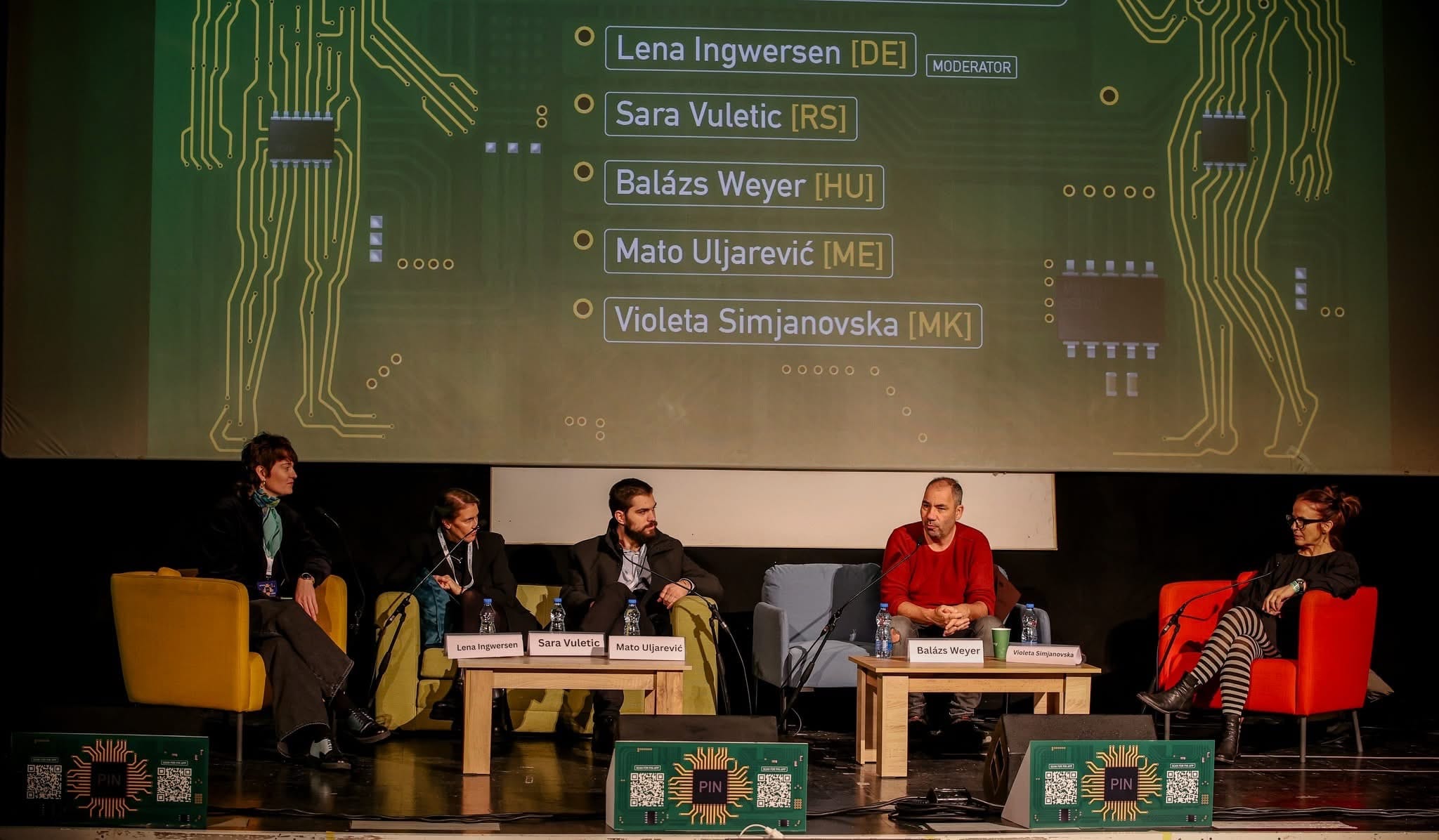
At the opening of the PIN Conference in Skopje, a panel discussion titled “From Bid Book to Real Life” was held, focusing on the challenges and practices involved in implementing the European Capital of Culture title. Participants included representatives from cities that have already undergone the ECoC process, such as Novi Sad and Veszprém, as well as future host cities, Nikšić and Skopje.   On behalf of the Nikšić 2030 – European Capital of Culture and UNESCO City of Music project, Mato Uljarević spoke at the panel. Other participants included Balázs Weyer (Veszprém-Balaton 2023 ECoC / UNESCO City of Music), Sara Vuletić (Novi Sad 2022 ECoC / UNESCO City of Media Arts), Lena Ingwersen (Music Cities Network), and Violeta Simjanovska (Sibelius Academy). The panelists focused on key steps that enable cities to transform the ECoC title into tangible and sustainable change. The PIN Conference is one of the most significant music conferences and showcase festivals in the region, serving as a key platform for connecting European music professionals, sharing knowledge, and developing the cultural and creative sectors in the Balkans. This year’s edition brought together over 400 participants from across Europe and featured 55 musical showcase performances over three days.   The conference provided an important opportunity to promote Nikšić as a regional music destination, in the context of its UNESCO City of Music designation and the 2030 European Capital of Culture project.

Former director of Maribor ECoC 2012 Suzana Zilic Fiser visits Niksic

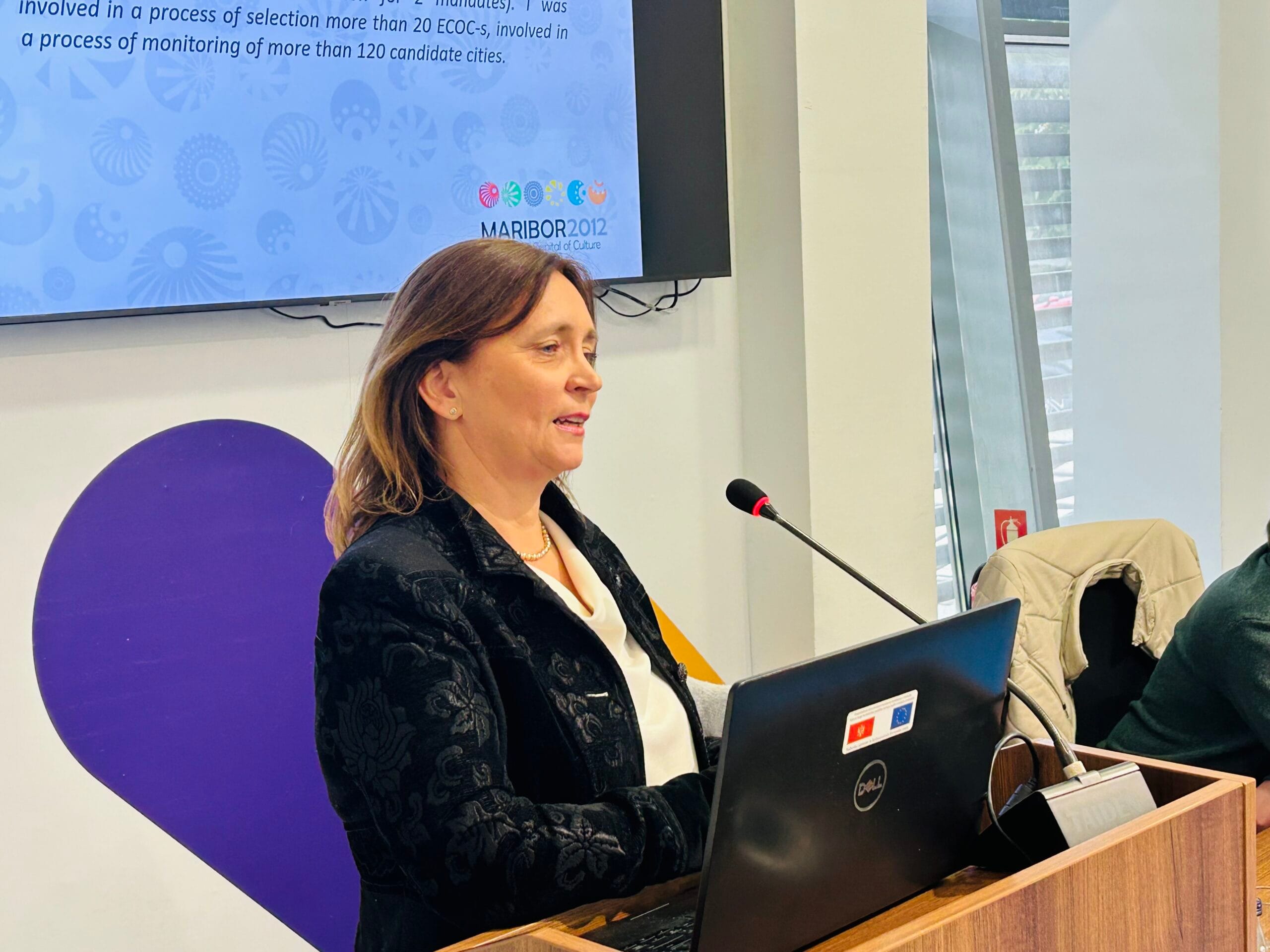
The President of the Municipality of Nikšić, Marko Kovačević, hosted a reception for Suzana Žilič Fišer, a longtime member of the European Commission’s Panel of Experts and former director of the Maribor Institute — European Capital of Culture 2012.   President Kovačević emphasized the importance of the fact that Ms. Žilič Fišer comes from Slovenia, a country with which Nikšić enjoys excellent cooperation — through investments, projects, and now cultural exchange as well. He noted that her experience will be of great value to Nikšić in successfully implementing the European Capital of Culture project, with full support from local institutions.    Ms. Žilič Fišer first congratulated Nikšić on winning the title of European Capital of Culture for 2030, expressing her great pleasure at being able to share her experience and contribute to this important project. She stressed that the European Capital of Culture is not only a project of one city, but of the entire country. As a member of the Panel of Experts, she took part in the selection process for more than 20 European Capitals of Culture and in the monitoring of over 120 candidate cities. The ceremonial reception was attended by the Head of the President’s Office, Marko Perućica, Project Manager of the Nikšić — European Capital of Culture 2030 Office, Mato Uljarević, and the Office’s Operations Manager, Nemanja Popović.    During the visit, Ms. Žilič Fišer toured the House of Digital Revolution and IPC Technopolis, where she delivered a lecture titled “What the ECoC Title Brings to a City.” She spoke about how a city prepares for its ECoC year, the most important criteria and challenges, the benefits and changes the process can bring to the community, as well as lessons from Maribor and other ECoC examples that may be particularly useful today. After the lecture, Ms. Žilič Fišer and representatives of the Nikšić ECoC 2030 Office visited the Faculty of Philosophy and Philology, where they met with the Dean of the Faculty of Philosophy, Dr. Tatjana Novović, Assistant Professor Dr. Nataša Krivokapić, and Professor Dr. Dijana Vučković. The meeting focused on potential cooperation between the Faculty of Philosophy and Philology and the University of Maribor, primarily in the fields of cultural policy, education, and international exchange of students and professors.    The visit of Ms. Suzana Žilič Fišer further strengthened the belief that Nikšić has exceptional potential to significantly enhance its cultural identity, urban development, and international visibility through the European Capital of Culture 2030 title. Her experience and recommendations represent an important incentive for further cooperation, planning, and community engagement, marking another step toward Nikšić becoming a European cultural center.

Greece’s Minister of Culture and Sports Lina Mendoni visits Niksic

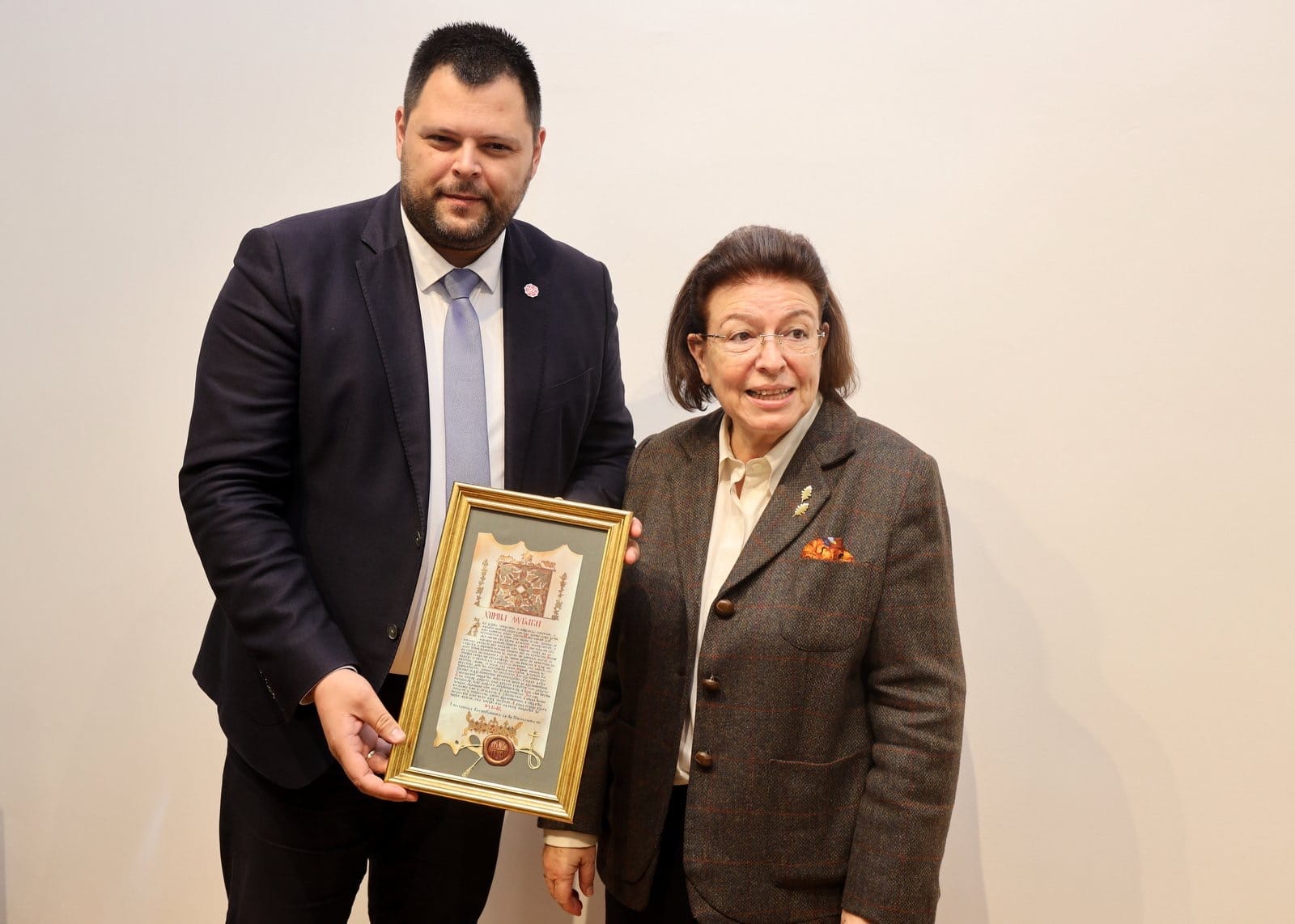
Greece’s Minister of Culture and Sports Lina Mendoni, Greek Ambassador to Montenegro Dimitris Joldasis, and Montenegro’s Minister of Culture and Media Tamara Vujović visited Nikšić.   The reception was held at King Nikola’s Castle, where the delegation was welcomed by the Mayor of Nikšić Marko Kovačević and the President of the Municipal Assembly Milica Lalatović Žižić, together with their associates and representatives of the Nikšić – European Capital of Culture 2030 Office.   The meeting at King Nikola’s Castle began with Greek spiritual and secular songs performed by the choir “Prepodobne Mati Angeline,” led by Professor Ana Bojić. “The visit of Minister Mendoni to Nikšić is of exceptional importance,” said Kovačević, adding that Nikšić will establish cooperation with Greek cities that hold the title of European Capital of Culture.   Montenegro’s Minister of Culture and Media Tamara Vujović emphasized that the visit to Nikšić, the future European Capital of Culture 2030, could not be missed. She noted the additional symbolism that the concept of the European Capital of Culture was originally created by Melina Mercouri, Greek Minister of Culture and predecessor of Lina Mendoni. During the meeting, new opportunities for cooperation between Greek cities and Nikšić were also discussed. During the visit of the Greek delegation, Vesna Todorović, Director of the Public Institution “Museums and Galleries”, presented a brief history of Nikšić, while representatives of the Nikšić ECoC 2030 Office presented details from the application book Open City.

Open ateliers day held at the Institute of black metallurgy – Marking Njegoš day, Montenegro’s culture holiday

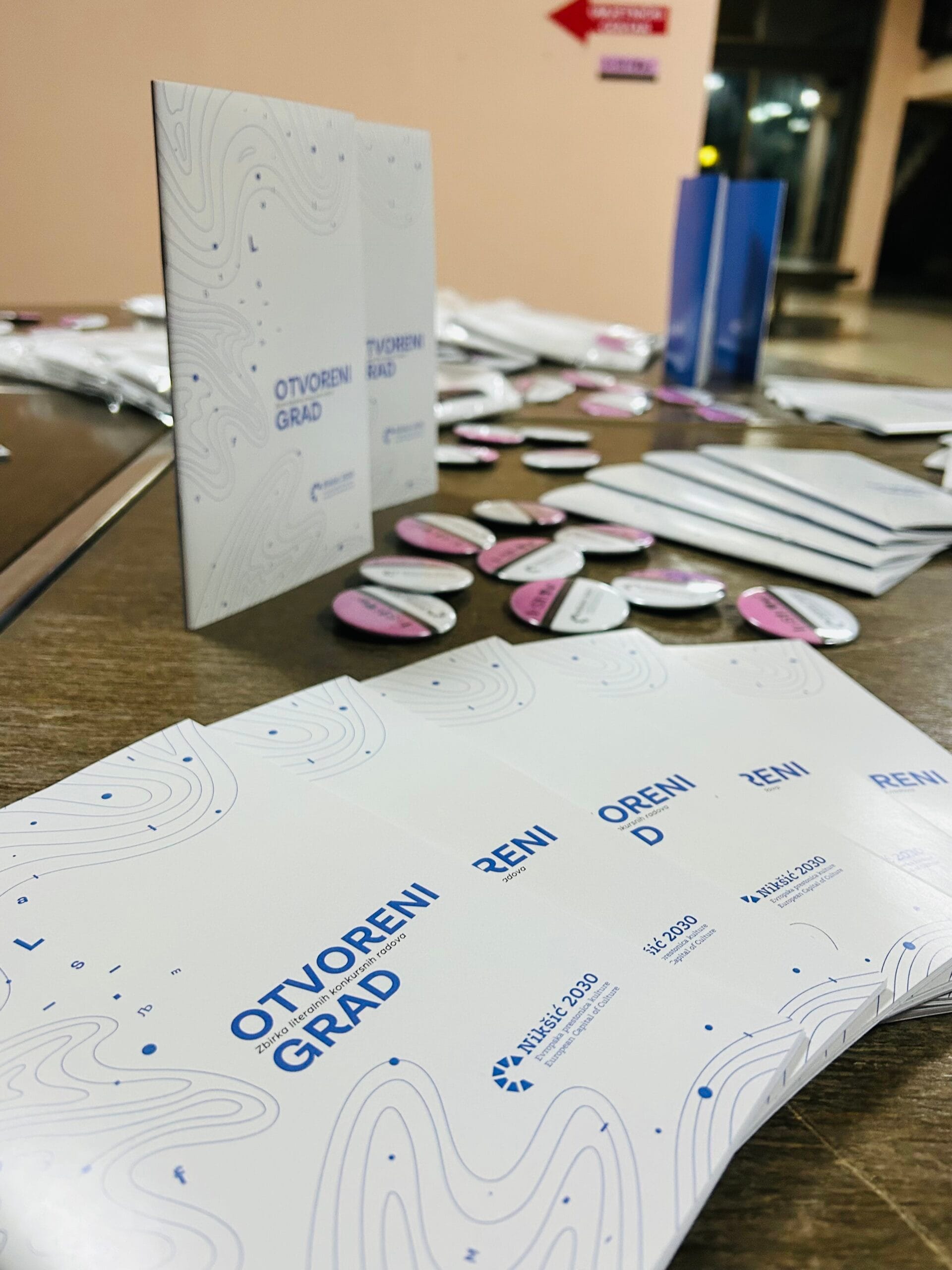
On the occasion of Njegoš Day, Montenegro’s national holiday of culture, the Institute of Black Metallurgy in Nikšić hosted an Open Ateliers Day last night – an event that gathered numerous artists and citizens in a spirit of community and cultural transformation of the city.   At the beginning of the program, the audience was addressed by Aljoša Matović, representative of the Nikšić – European Capital of Culture 2030 Office, who emphasized the importance of such events for the affirmation of the city’s cultural scene: “Today, the Institute of Black Metallurgy symbolizes what the Nikšić – European Capital of Culture 2030 project aims to achieve – to recognize, revive, and transform our industrial heritage into contemporary spaces of culture and art. These ATELIERS are not just spaces of creation, but a testimony to the power of vision, identity, and the spiritual renewal of our city.” On behalf of the artistic community of the Institute, Jelena Krivokapić, a representative of the local art scene, spoke to the audience, reminding them of the symbolic connection between industry and art: “For fifteen years, the community of artists at the Institute of Black Metallurgy has been creating in a space that once belonged to industry and now belongs to art. This place, where once the strength of steel and the identity of Nikšić were forged, today becomes a space of creation and transformation of spirit. For us, the Institute is a home open to future artistic residencies and cultural encounters – a bridge between Nikšić and the world. In the spirit of Njegoš’s words, ‘Let it be what cannot be,’ we believe that from industry is born art, and from steel – the light of the spirit.”   After her, Miljan Mijušković, advisor for culture and tourism to the President of the Municipality of Nikšić, also addressed the audience, highlighting the symbolism of the space and its new cultural role: “Tonight we are in a space that once belonged to industry – a place where metals were tested and materials shaped. And tonight, in this very same space, we witness a true miracle: we see living ideas, we see thoughts being shaped, and art being created. We are witnessing how our industrial heritage is slowly becoming our cultural future.” As part of the program, the brochure “Open City” was presented – created through a literary competition held within Nikšić’s bid for the title of European Capital of Culture 2030. The goal of the competition was to encourage citizens to express through literary creativity their vision of Nikšić’s future – a city open to Europe, the world, and new ideas. On this occasion, certificates were awarded for the three best works to: Anja Odalović, Martina Simunović and Radoje Radunović. After the official program, visitors had the opportunity to tour the Institute of Art, talk with artists, and directly experience the process of creating artworks.   Once a symbol of Nikšić’s industrial strength, the Institute of Black Metallurgy is now evolving into a center of contemporary art. In the years to come, through the Nikšić ECoC 2030 project, part of the space will be transformed into an Institute of Art and Artists’ Residences, with monthly open ateliers and programs, providing even more opportunities for encounters and interaction with artistic creation.

Nikšić presented the title of ECOC 2030 at the Belgrade book fair

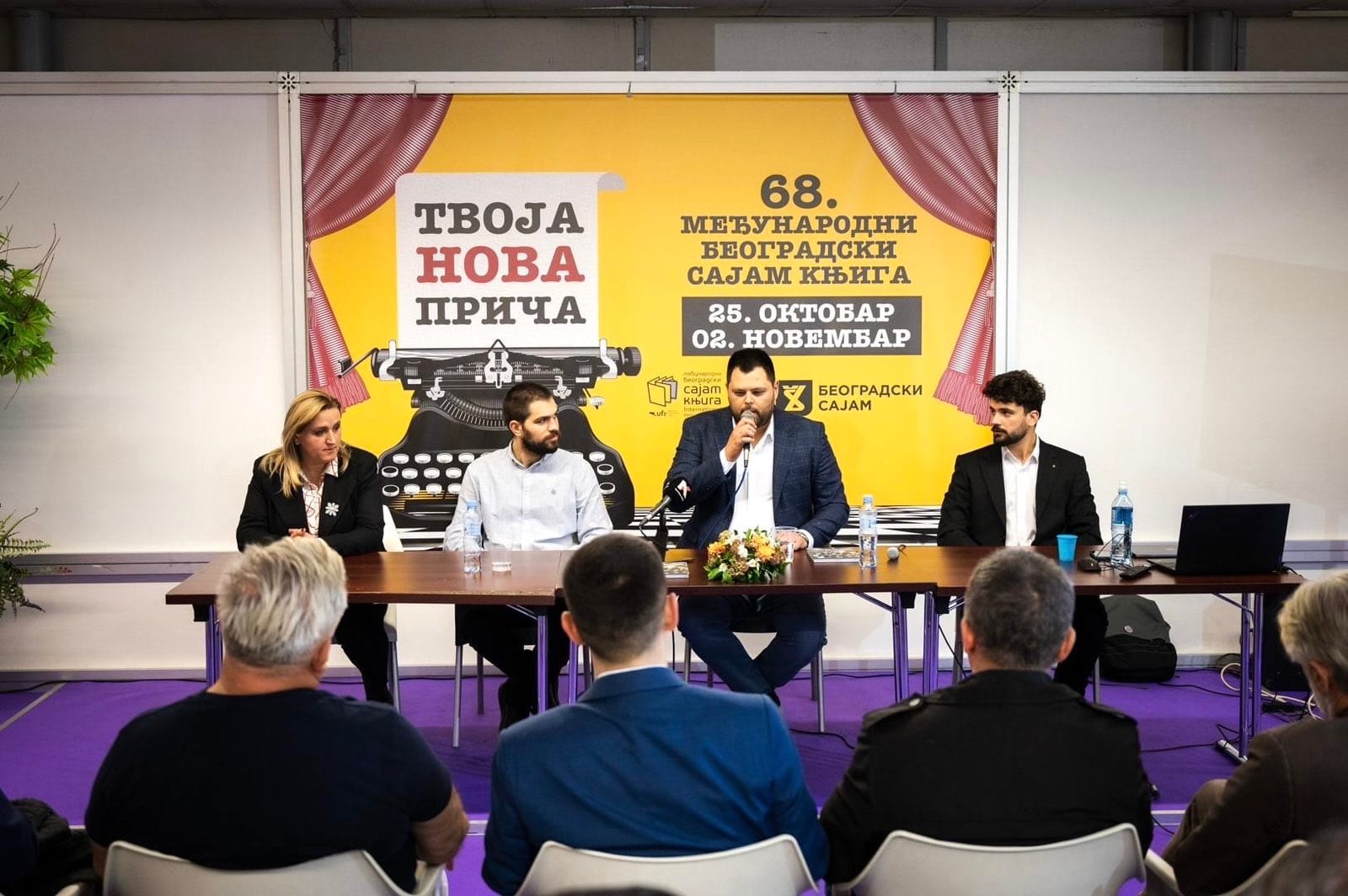
With a ceremonial presentation at the 68th International Belgrade Book Fair, in the “Vasko Popa” Hall, Nikšić officially marked for the first time the achievement of the prestigious title of European Capital of Culture for 2030.   The President of the Municipality of Nikšić, Marko Kovačević, emphasized that this moment holds special symbolism, as the idea of Nikšić’s candidacy was first launched at the Belgrade Book Fair two years ago.    “At this very place two years ago, we decided to begin the process of Nikšić’s candidacy for the European Capital of Culture. Two years later, we return here as the city that has won that title. This is the result of the work and energy of young people from Nikšić’s cultural scene, who have proven that our city has the strength to once again become the cultural center of Montenegro,” said Kovačević. The President of the Municipal Assembly of Nikšić, Milica Lalatović Žižić, reminded that the local parliament unanimously supported the initiative for Nikšić to apply for this title, emphasizing her pride and gratitude to the team that led the process.   “All councilors in the Municipal Assembly supported this decision, and that was a great satisfaction for me as the president of the parliament. We went to Brussels full of positive energy and faith that this story would succeed — and it truly did. The greatest credit goes to the young team that carried all this through their work, enthusiasm, and belief in Nikšić,” said Lalatović Žižić. The project manager of the Office Nikšić — European Capital of Culture 2030, Mato Uljarević, stressed that the candidacy process brought concrete institutional results and laid new cultural foundations.   “We established the first Long – term Strategy in Nikšić and formed a platform for strategic planning of cultural policies. An initiative has also been launched to establish a special Secretariat for Culture, which will make Nikšić unique in Montenegro. In cooperation with the University of Montenegro, we will implement a ten-year project for cultural evaluation, running until 2035,” said Uljarević.   He concluded that Nikšić is increasingly becoming a center of cultural events in Montenegro and the region, just as it was throughout its rich history. The operations manager of the Office Nikšić — European Capital of Culture 2030, Nemanja Popović, presented plans for new cultural infrastructure, including the completion of works on the Dom Revolucije (Home of the Revolution), the restoration of the cultural and historical complex near King Nikola’s Palace, the renovation of Bedem Fortress, and numerous other projects to be implemented over the next five years.

Nikšić becomes a UNESCO City of music

On World Cities Day 2025, UNESCO recognized 58 new cities for their outstanding commitment to creativity as a driver of sustainable urban development. Among them is Nikšić, which earned the title of UNESCO City of Music.   With this recognition, Nikšić has been acknowledged as a city that builds a sustainable future through music and creativity, fosters cultural development, and strengthens community connections. Alongside Nikšić, the UNESCO Creative Cities Network in the field of music welcomed cities such as New Orleans (USA), Kyiv (Ukraine), Liège (Belgium), Évian (France), Wuxi (China), and Lalitpur (Nepal).   Through this achievement, Nikšić reaffirms its status as Montenegro’s cultural and musical center — a city that nurtures talent, unity, and an authentic spirit through art and creativity.

EU AMBASSADOR TO MONTENEGRO, JOHAN SATTLER, VISITS NIKŠIĆ – EUROPEAN CAPITAL OF CULTURE 2030

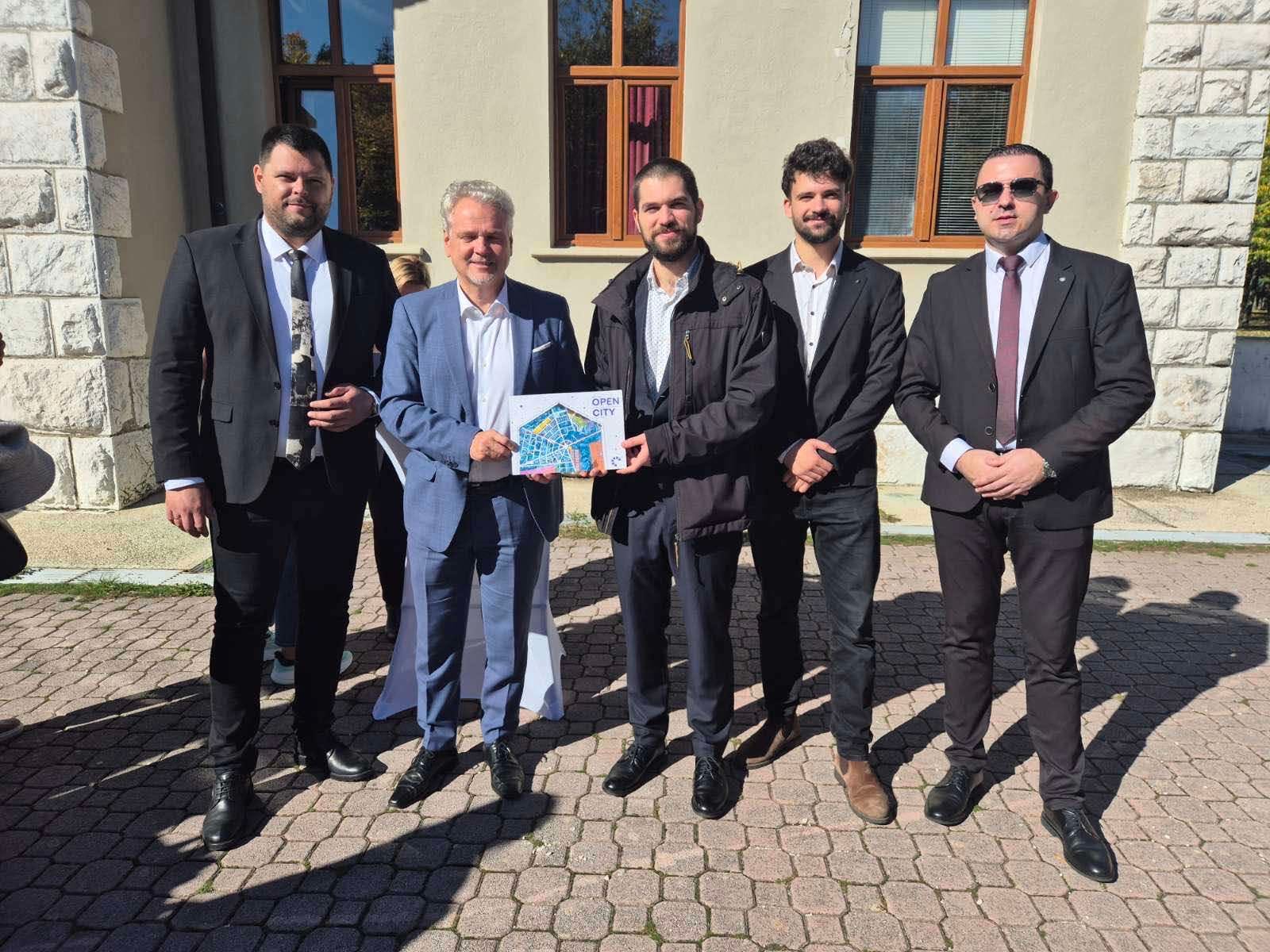
The President of the Municipality of Nikšić, Marko Kovačević, together with the President of the Municipal Assembly, Milica Lalatović Žižić, hosted a meeting with the EU Ambassador to Montenegro, Johan Sattler. They discussed ongoing projects being implemented in the Municipality of Nikšić, as well as the results achieved in the previous period — among which the prestigious title of European Capital of Culture 2030 stands out. The meeting was also attended by representatives of the Office Nikšić 2030 – European Capital of Culture, Mato Uljarević and Nemanja Popović. “This prestigious title is of great importance not only for Nikšić but for the entire country. Through this success, as well as through many other projects, Nikšić has made a contribution to Montenegro’s path toward the European Union. We have achieved significant progress in the field of environmental protection — we have resolved the decades-long problem of the Mislov Do landfill, and given that the Gračanica River has been environmentally degraded for decades and its riverbed is barely recognizable, we plan, in cooperation with the World Bank and the Ministry of Agriculture, to implement an important project for the restoration of the Gračanica River bed in the area of existing bridges. In addition, we have carried out numerous infrastructural projects and will continue to do so, all for the benefit of the citizens of Nikšić,” stated President Kovačević. Ambassador Sattler congratulated the Municipality on winning the European Capital of Culture title and expressed his satisfaction that Nikšić is making extensive use of EU projects. “Nikšić plays an important role in Montenegro’s accession to the European Union because you are the closest to the citizens, and we know that 70 percent of EU legislation is implemented at the local level. I am pleased to see that Nikšić is taking advantage of EU-funded projects,” noted the Ambassador.   Project Manager of the Nikšić 2030 – European Capital of Culture Office, Mato Uljarević, emphasized that the title of European Capital of Culture is extremely important not only in the cultural sense but also in the social and European context. “This title represents an opportunity for Nikšić to become a platform for promoting European values, dialogue, cooperation, and creativity — and to strengthen the European identity of our city through culture and innovation. The Nikšić 2030 project will play a strong role in Montenegro’s European integration process, as through its implementation we promote the core values of the European Union — openness, solidarity, sustainability, and unity. Symbolically, the opening ceremony of the European Capital of Culture in 2030 will be designed in the spirit of European unity and dedicated to Montenegro’s accession to the European Union,” said Uljarević. Following the meeting, the participants, together with members of the Municipal Assembly, took part in a tree-planting activity in the City Park, with saplings donated to the city by the European Union.   The Ambassador, along with representatives of the Municipality of Nikšić and the Nikšić 2030 – European Capital of Culture Office, also participated in a cleanup action along the Gračanica River. During his visit, he toured IPC Tehnopolis, the Nikšić 2030 – European Capital of Culture Office, and the newly opened House of Digital Revolution.

Nikšić – European Capital of Culture 2030

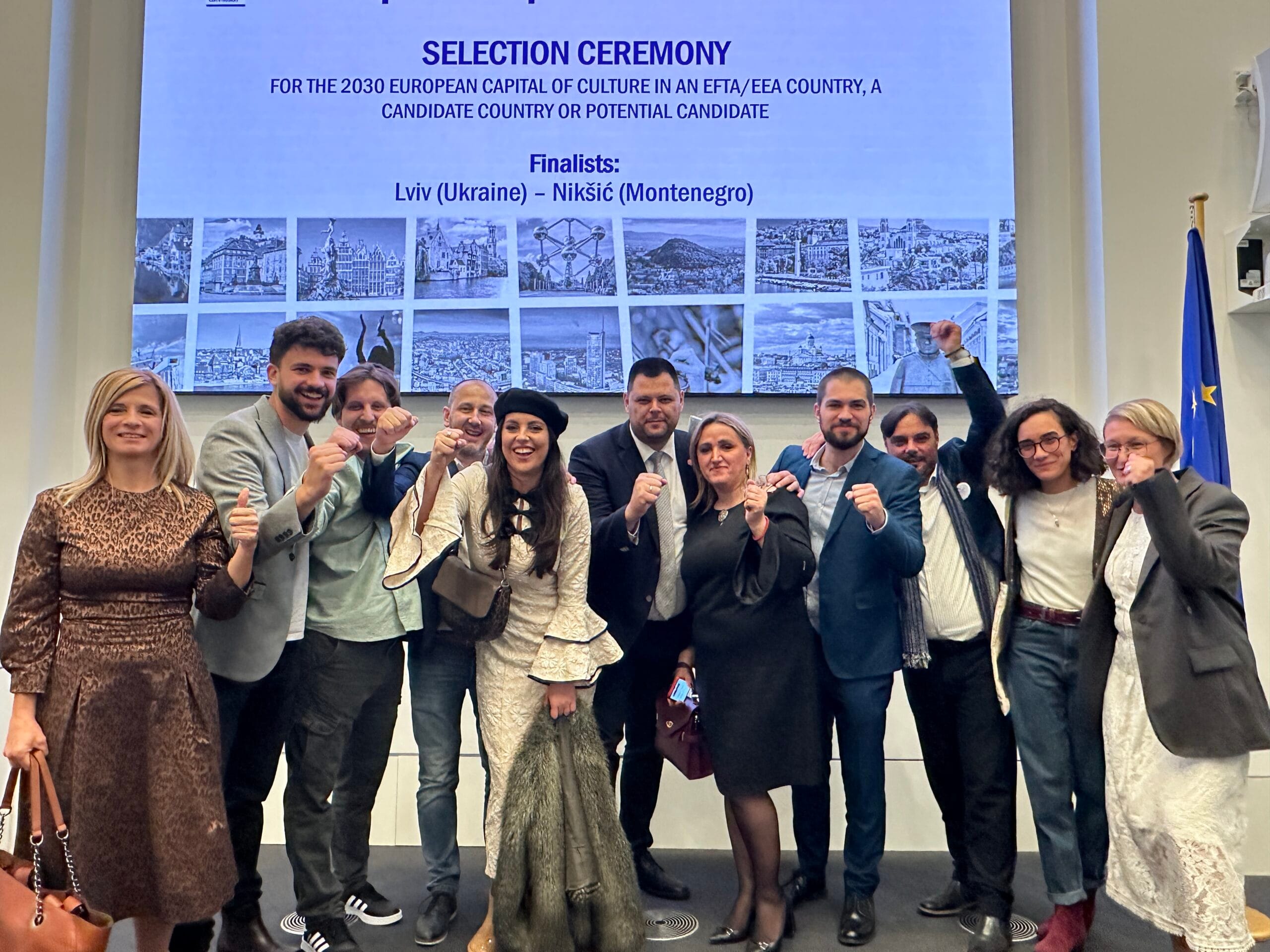
The delegation of the Nikšić European Capital of Culture 2030 team traveled to Brussels on October 19, 2025, to present the city’s vision before a panel of European Commission experts and participate in the final stage of the competition. This candidacy represents a significant opportunity for cultural, economic, and social advancement – transforming a post-industrial city into an open, creative, and contemporary European cultural hub. October 19 – Preparations for the Final Presentation The day before the final presentation was dedicated to intensive preparations. The team meticulously reviewed every segment of the presentation – from the cultural program and infrastructure to strategies for sustainable development and ways to engage the local community and international partners. Each delegation member had a key role in presenting Nikšić’s vision, with the goal of ensuring that the presentation was clear, well-reasoned, and grounded in concrete projects.   October 20 – Final Presentation On October 20, the Nikšić delegation delivered the final presentation before the European Commission panel in Brussels. The presentation was evaluated as highly professional and serious, followed by two rounds of detailed questions. The team answered all questions clearly, precisely, and convincingly, confirming that Nikšić’s candidacy was thoughtfully planned, sustainable, and capable of truly transforming the city in the years to come.   October 21 – Official Announcement At the House of European History, the panel president, Hrvoje Laurenta, announced that Nikšić had been selected as the European Capital of Culture for 2030. This recognition is a tribute to the dedicated work, clear vision, and community energy behind this project. The Nikšić delegation representing the city in Brussels: Marko Kovačević – Mayor of Nikšić Tamara Vujović – Minister of Culture and Media of Montenegro Mato Uljarević – Project Manager, Nikšić 2030 ECoC Nemanja Popović – Operations Manager, Nikšić 2030 ECoC Aljoša Matović – Outreach Manager, Nikšić 2030 ECoC Lucija Strunjaš – International Cooperation PR, Nikšić 2030 ECoC Darko Aleksić – Administrative Manager, Nikšić 2030 ECoC Nataša Krivokapić – Professor, Faculty of Philosophy, Nikšić Anđela Nikčević – Project Manager, IPC Tehnopolis Nina Bogdanović – Art Historian Miljan Mijušković – Cultural Advisor to the Mayor of Nikšić Their presentation reflected the spirit of our city, Nikšić’s readiness to shine on the European cultural stage and its ability to meet all standards and expectations of this prestigious recognition.   This is a victory for all of us – for everyone who loves Nikšić, lives it, creates in it, and believes in its potential.

Scroll to Top